


CASE STUDY
CrodaTherm 5 offers green cold-chain solution
The problem
Cold-chain logistics is a very demanding sector, especially when it comes to delivering drugs and vaccines. The refrigerated chain should be kept within 2 – 8ºC and phase change material (PCM) that melts at 5ºC fits very well with the requirements of this sector.
How PCM technology solved it
Croda, which is based in Snaith, United Kingdom, has recently developed the CrodaTherm 5, a fully bio-based and biodegradable PCM that melts at 5ºC. The product’s unique properties include very narrow melting and crystallization transitions and high latent heat capacity that make it ideal for 2–8ºC temperature-controlled packaging in the pharmaceutical and food industries. The product also shows excellent cycling stability, which gives long-term reliability for cold-chain logistics.
Unique challenges and solutions
 The cold-chain sector increasingly places a high value on solutions that have a lower environmental impact that fits well with corporate sustainability strategies.
All raw materials used to produce CrodaTherm 5 come from renewable sources and the final product is readily biodegradable. CrodaTherm 5 can help customers reduce the carbon footprint of their packaging and operations while providing exceptional thermal regulation.
“CrodaTherm 5 offers a new compact thermal regulation solution for the cold-chain market in all regions of the world,” said Martin Butters, technical manager for industrial specialties of Croda. “We have applied our green chemistry know-how to meet a market requirement for environmentally friendly PCMs that this new product will help to address.”
Case study is a new feature of the Phase Change Matters newsletter, showcasing how phase change materials are being used to solve problems in many sectors, including energy, transportation, construction, cold-chain logistics and textiles.
TES DESIGN
Simulation program helps incorporate PCM in design of TES
A new simulation program promises to help thermal engineers and building planners to design thermal energy storage (TES) systems such as electric grid-supporting operation of heat pumps. Bernd Boiting, professor of heating, ventilation and air conditioning (HVAC) at Fachhochschule Münster (University of Applied Sciences) in Steinfurt, Germany, and chairman of the Executive Board of the Quality Association PCM, developed the program, which provides a free demo version that can be downloaded and a full version that requires some consulting to use.
 “I am very interested in bringing the special capabilities of thermal hybrid latent heat storage systems more into the focus of future energy concepts for our buildings,” Boiting said.
The program, which is based on the testing regulations of the RAL Quality Mark RAL-GZ 896, allows PCMs to be selected from an expandable database and simulated in objects within hybrid thermal storage systems. Storage units can be designed for specific projects and realistically simulated as cold and heat storage units under freely selectable static and dynamic boundary conditions.
TES are required to integrate renewable energies into buildings, Boiting said, adding that data on the amount of energy that can be stored and the thermal output that can be delivered is necessary to plan TES.
“This is particularly complicated in the case of hybrids, as they have dynamic power consumption and output depending on the integrated PCM objects and operating mode,” he said. “We have recorded measured values in laboratory tests over several years and approximated them using physically based, empirical and numerical algorithms. That method worked very well, but could only be applied in a very complicated way.
“That’s why I first developed a kernel that can carry out the dynamic simulation parameterized. Then we developed a user-friendly GUI that enables the experienced engineer to carry out simulations of different TES under real dynamic operating parameters in a very short time.”
There have been mixed results with early users of the demo program. Boiting said users who lack an understanding of the thermodynamic behavior of PCM often try to calculate results by trial and error, which leads to results that cannot be used in real-world applications. He recommends using the full version that allows for any kind of thermal storage, PCM objects, PCM materials and operating parameters.
For more information about the simulation program, contact Boiting at boiting@fh-muenster.de.
ON THE MOVE
Horwath returns as Insolcorp CEO
Peter Horwath recently announced that he has returned as CEO of Insolcorp, a PCM and commercial solar heating company based in Albemarle, North Carolina, after spending a year as the senior scientist for phase change materials for Armstrong World Industries Inc.
 Horwath had joined Armstrong to help with “the acquisition and transfer of knowledge” after it acquired Insolcorp’s PCM-laden TempLok energy-saving tiles as well as other manufacturing and technology assets. “Armstrong is a fantastic company full of highly talented people. They have a great visual for how phase change materials can complement their products and have substantial positive impact on buildings and people,” he said. “I learned a tremendous amount from this experience and I am very enthusiastic about what Armstrong will do in the future.”
However, the co-founder of Insolcorp and founder of Phase Change Energy Solutions Inc. (now Phase Change Solutions of Greensboro, North Carolina) said he wants to return to the “organized madness and flexibility of a small company.”
“It is great being back in my old seat running this company,” Horwath said, adding that he wants to guide the expansion and improvement of Insolcorp’s PCM product base, particularly in the areas of thermal energy storage and cold-chain logistics. He said the company will launch several new products in the next few months.
“I’m still excited by the potential of this industry and I am delighted by how it has grown. I have been involved in this area nearly since the beginning and it is rewarding to see so many applications we envisioned years ago —— and many we didn’t —— are being commercialized,” he said.
Horwath, who has advised companies and government groups worldwide on PCMs, is currently working to resurrect the North American Phase Change Material Industry Association, which fell dormant during the COVID epidemic. For more information, email Horwath at pete@insolcorp.com.
IN BRIEF
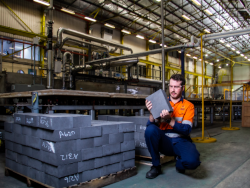 • MGA Thermal, a clean energy company in Tomago, Australia, is partnering with Chevron to conduct an engineering study of its thermal energy storage that uses graphite bricks impregnated with PCM (alloy particles). The alloy stores heat that MGA says enables “24/7 clean steam discharge in the scale of MWhs to GWhs for industrial processes or base load electricity.” A 5 MWh unit is to “deliver steam at temperatures ranging from 150°C to over 550°C” at an unnamed Chevron site. “We’re confident that our clean steam solution will play a crucial role in helping industry leaders meet their ambitious decarbonization goals,” said Alex Post, CTO and co-founder of MGA Thermal. Luc Huyse, who is manager for operations and facilities at Innovation/Technology Ventures at Chevron in Houston, Texas, shared Post’s optimism: “We look forward to the insights this study provides as we continue our journey towards a lower-carbon future.”
• Anthro Energy of Alameda, California, announced the launch of Anthro Proteus, which it says is a new class of injectable phase-change electrolytes that make lithium-ion batteries more safe and stable without having to change existing manufacturing processes. This technology is deployed by injecting a liquid precursor into the battery, where it transitions from a liquid to a solid polymer material that forms a protective secondary binder network around the battery’s active materials. Anthro Proteus will be produced in commercial quantities at a new pilot facility opening in California in mid-2025, along with Anthro Proteus-containing battery cells. Anthro Energy will share more information about Anthro Proteus at the International Battery Seminar and Exhibit on March 19 in Orlando, Florida.
• The European Innovation Council (EIC) recently released its 2024 Tech Report, which spotlights 34 emerging technologies that could help address pressing global challenges in three categories: green; health; and digital, industry and space. High-temperature thermal energy storage (TES) was one of 12 technologies featured in the green category, which highlights “transformative innovations” that could help achieve Europe’s climate and sustainability goals. The report said high-temperature TES holds the promise of significantly reducing energy consumption and emissions, enhancing the stability and reliability of power systems, providing a cost-effective alternative to traditional energy storage solutions, and integrating renewable energy sources.
 • Vishnu Sasidhara, vice president of climate technologies for Pluss Advanced Technologies, announced on LinkedIn that the company, which is based in Gurugram, India, has completely redesigned its website to make it easier for its customers “to quickly and directly access what they need.” He added, “Building a website for a materials and engineering company has been an enriching challenge. It’s about finding the right balance between presenting complex ideas, data, and applications while keeping the interface intuitive and user-friendly.” Sasidhara said he welcomes feedback on the new site.
• A research team at Swansea University (Swansea, United Kingdom) has found that adding inorganic PCM to water-based heat storage could reduce a building’s carbon emissions by up to 22 percent. “We were working with charging and discharging to simulate commercial and public sector building use,” said Jonathon Elvins, a senior technology transfer fellow who led the research team. “Charging at 2kW and 4kW, discharging at 2kW, 4kW, 6kW, 8kW and 10kW.” Quantaco, a software platform designed to help decarbonize property portfolios, commissioned the work, which resulted in a thermal storage model that can predict energy storage. “Heat decarbonisation is an important element in the UK’s net-zero journey, and phase change material has a key role to play,” said Quantaco founder and CEO Aneysha Minocha. “Our recommendation to clients will be that phase change material is an evolving technology, and we recommend that they consider PCMs as part of their suite of solutions.”
• A composite layer of hydrated salt and expanded graphite developed by North China Electric Power University could help prevent thermal runaway for lithium-ion batteries, according to a TechXplore report. The PCM can reduce battery temperature from approximately 66°C to 34°C. The most immediate application would be the electric vehicle market. However, experts at the lab in Beijing said the composite could also potentially be used for grid storage. “Its dual-stage control demonstrates strong potential as a passive thermal safeguard, especially in cases where active management might be unreliable or too costly,” senior researcher Xing Ju told TechXplore.
• New energy vehicle (NEV) maker Li Auto and the Aerospace Materials Institute of the Third Academy of China Aerospace Science and Industry Corporation (CASIC) launched the Advanced Thermal Insulation Materials Joint Laboratory in Beijing, according to a post on Li Auto’s WeChat account. The goal of the partnership between the two Beijing entities is to leverage the institute’s expertise in nano-insulation materials, PCMs, and ceramics and Li Auto’s NEV expertise to develop high-performance insulation materials that provide superior thermal safety solutions for power batteries.
PATENTS
Phase change material for ultra-low temperature protection
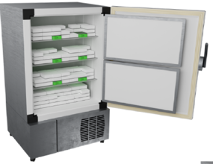 U.S. patent application 20240417613 (applicant Insolcorp, LLC, Albemarle, North Carolina):
“This disclosure relates to compositions for use as phase change materials (PCMs) for ultra-low temperature (ULT) protection. Such compositions and materials are used in the field of storage and transportation of heat-sensitive products.”
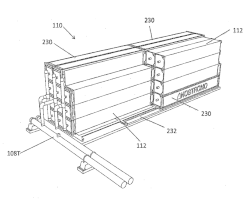 U.S. patent application 20250020414 (applicant Nostromo, Ltd., Even-Yehuda, Israel):
“A thermal energy storage system, including an ice brick having at least one inlet and at least one outlet for a heat transfer fluid, and multiple capsules having a phase change medium therein, where the capsules are arranged inside the ice brick, where an average length of an actual flow path of the heat transfer fluid from a front end of the ice brick to a back end of the ice brick is larger than a length of the ice brick, and where the ice brick is shaped as a tube with a rectangular cross section having a ratio of the length of the ice brick to the width of the ice brick is in a range of 4 to 50 and/or a ratio of a width of the ice brick to the height of the ice brick is in a range of 0.5 to 4.”
Cascade phase change material (PCM) heat pump water heater
U.S. patent application 20240410621 (applicant Small Planet USA, Tumwater, Washington):
“One embodiment provides a cascade phase change material (PCM) natural refrigerant heat pump system that includes multiple heat pumps. A heat exchanger is connected to the multiple heat pumps. A thermal battery bank including multiple PCM battery cells is connected to the heat exchanger in a closed loop. A circulator pump is connected to the heat exchanger and the multiple PCM battery cells.”
More U.S. patent applications:
Phase change composite apparatus for battery packs and methods of making
(Beam Global, San Diego, California.) | Shipping system for storing and/or transporting temperature-sensitive materials (Cold Chain Technologies, LLC, Franklin, Massachusetts.) | Head protection hood (ODM GmbH, Wattenheim, Germany.) | Energy storage energy system (Quanling Wang and Miaohong, Wang, Qinhuangdao, China.) | Cryogenic shipper (Cryoport, Inc., Brentwood, Tennessee.) | Multilayer cooling assemblies for thermal management (Alexium, Inc., Greer, South Carolina.)
RESEARCH ROUNDUP
From Applied Thermal Engineering:
• Enhancing heat transfer efficiency in solar storage devices using eddy current structures and vibrations
• PDMS/graphene oxide coated wood-based composite phase change materials with efficient solar-thermal-electric conversion
• Phosphoric acid derivatives and metal hydroxide complexes filled TiO2 nanotubes modified phase change microcapsules for enhancing fire safety and energy management
From International Journal of Thermofluids:
From Journal of Building Engineering:
• Study on the physical mechanical properties and freeze-thaw resistance of energy storage concrete with artificial phase change aggregate
• An innovative lightweight aggregate composite phase change material for thermal energy storage enhancement of concrete under hot weather conditions
From Chemical Engineering Journal:
From Journal of Energy Storage:
• Bioinspired wood-based composite phase change materials for efficient photothermal conversion and energy storage
• Experimental study and synergistic performance analysis of phase change material assisted cold thermal storage system for energy efficient air cooling
• Experimental and numerical thermal performance analysis of a phase change water tank with S-shaped channel
• Parametric optimization of cylindrical vaccine transport containers with dual phase change materials to prevent vaccine freezing and heat damage using artificial neural networks
• Effect of the integration mode of phase change materials on thermal performance of radiant floor heating systems
From Building and Environment:
From Industrial Crops and Products:
• Phase-change thermal storage transparent wood based on optical reversibility
• Experimental investigation of novel bio-composite with integrated phase change materials (PCM) for enhanced energy saving in buildings
From Renewable Energy:
• Novel water-based composite phase change materials for cold energy storage applications
From Next Materials:
From International Journal of Heat and Mass Transfer:
• Performance improvement of a hybrid battery thermal management system with pseudo-3D topology optimization
• Study of a medium-temperature eutectic composite phase change material with effective thermal management in lithium-ion batteries
From Sustainable Polymer & Energy:
From Solar Energy:
From Energy and Buildings:
• Development of modified disodium hydrogen phosphate dodecahydrate/vermiculite composite phase change material and its application in radiant heat storage panel system
• Transient cooling performance and parametric characteristic of active–passive coupling cooling system integrated air-conditioner, PV-PCM envelope, and ice storage
From International Journal of Biological Macromolecules:
NETWORKING
Connect with PCM experts and industry leaders on LinkedIn
 More than 1,800 people have joined a LinkedIn group devoted to the discussion of phase change material and thermal energy storage. You are invited to join the Phase Change Matters group and connect with PCM and TES experts from around the world.
This month we welcome Kimon Konakoglou, R&D materials engineer at Hydropac, Ltd., High Wycombe, United Kingdom; Ravindra Rathod, B2B sales and marketing specialist, Maharashtra, India; Denali Ibbotson, Ph.D. student at Texas A&M University, College Station, Texas; Amira Salama, researcher for thermal energy storage materials at the Iberian Centre for Research in Energy Storage (CIIAE), Cáceres, Spain; Mahalakshmi Ganesh, market development for the Saint-Gobain Research North America, Northborough, Massachusetts; Ashraf Haroon, research scholar at the National Institute of Technology, Jamshedpur, Jamshedpur, India; Siricharn Jirapongphan, technology solution business manager at SCG Chemicals, Bangkok, Thailand; Ayşenur Vardar, R&D specialist at İstanbul Teknik İnşaat, Istanbul, Turkey; Eric Matthes, CTO at Nanolope, Berlin, Germany; Dana Castro, marketing manager at TempAid, Mississauga, Canada; Jens Meiser, managing director at Carl Meiser GmbH+Co KG, Albstadt, Germany; Esra Yilmaz, architect, Samsun, Turkey; hala salhab, Ph.D. student at the University of Campania, Genoa, Italy; Nihal Sevgili, architect at TÜMAŞ, Ankara, Turkey; Radhi Majmudar, principal at Innovative Structural and Specialty Engineering, New York, New York; Mario De Ferrari, owner of De Ferrari Idrotermica, Genoa Italy; and Francesco Ambrosecchia, assistant product manager at Dryce — Nippon Gases, Lombardia, Italy.
NEWS TIPS
Does your company, agency or university have a job opening, new research, new product or other news you’d like to share? I would love to hear from you. Please contact newsletter editor Amy Phillips at phasechangematters@gmail.com.
A WORD FROM OUR SPONSOR
 This newsletter is made possible through the generous support of the RAL Quality Association PCM and the members listed below. To learn more about the association, including membership benefits, please contact Stefan Thomann, executive director, at pcm@kellencompany.com.
Axiotherm GmbH | B Medical Systems | Croda International Plc. | ISU Chemical Co. Ltd. | RuhrTech | Microtek Laboratories | PCM Technology | PLUSS Advanced Technologies | PureTemp LLC | Rubitherm Technologies GmbH | Sasol Germany GmbH | S.Lab Asia Inc. | Sunamp Ltd. | va-Q-tec AG