

TRANSPORTATION
Ocean freight deemed success, thanks to Enshield thermal blanket
Cold Chain Technologies (CCT) (Franklin, Massachusetts) announced that its Enshield thermal blanket proves that ocean freight is a viable mode for transporting temperature-sensitive pharmaceuticals after the success of a landmark project with logistics leaders Kuehne + Nagel (Schindellegi, Switzerland) and Teva Pharmaceuticals (Tel Aviv, Israel).
 Project designers chose one of the most demanding sea routes — from Germany to Australia — to prove that sea freight can offer a more cost-effective and sustainable option to air cargo. CCT says that one pallet flown from France to Singapore produces five times more CO₂ than 22 pallets shipped by sea.
“This is a long journey with significant seasonal and temperature variations, which meant that a successful test would allow us to qualify many lanes in a single study,” said Judineth Miranda, senior director key account management healthcare at Kuehne + Nagel.
The temperature stayed within the range of 2-8°C over the 10 weeks the cargo was in transit, despite major logistical setbacks including closure of the Suez Canal and a power outage. The team credited Enshield’s Koolit Advanced gel, a form-stable PCM that never turns to liquid and is highly flexible, allowing it to wrap snugly around the pallet.
“Pretty much everything that could go wrong did so, in terms of putting pressure on the integrity of the cargo,” said Fabian Reitmeier, project manager logistics integrity at Teva Logistics. That included a holiday that led to the cargo remaining in Sydney Harbour for an additional four days in temperatures nearing 40°C.
“This was the most challenging run we did, but the one that performed best – and it’s clear that Enshield was crucial to this success,” Miranda said.
RAL UPDATES
The General Assembly of the RAL Quality Association PCM met at the University of Applied Sciences/FH Münster in Steinfurt, Germany, on Oct. 8. A top order of business was approval of three revisions that will make it easier, faster, and less costly to earn RAL Quality Mark certification. First, there is no need to cycle PCM that are pure n-alkanes with a purity ≥97%. Second, there is an option to test only two samples of PCM/PCM-C or one sample of PCM-O or PCM-S. Last, a company now has the option to use its own test stand for cycling stability if it is first approved by the Quality Committee and external monitoring institutes. You may view the revised terms of Quality Assurance RAL-GZ 896 in full.
“The RAL Quality Association PCM has worked tirelessly to establish best practices and integrity in the emerging PCM marketplace with our RAL Quality Mark,” said Stefan Thomann, the association’s managing director. “We are excited that in the coming months more products will be awarded the RAL Quality Mark, which offers consumers the highest confidence in the safe, effective, and lasting performance of the PCM. The RAL Quality Mark and our knowledgeable and passionate members have a lot to offer to new members and the PCM marketplace. We look forward to growing the association and the marketplace.”
The General Assembly also elected the Executive Board and Quality Committee for the 2025-2028 term. Bernd Boiting (University of Applied Sciences Münster) was re-elected as chairperson of the Executive Board and Sara Tahan Latibari (Pluss Advanced Technologies B.V.) was elected vice-chairperson. In addition, Esther Kieseritzky (Rubitherm Technologies GmbH) was elected chairperson of the Quality Committee. Members also established a Communications Committee to address the education and marketing needs of members and the industry at large.
The next General Assembly meeting will be held in Edinburgh, Scotland, on March 10, 2026. Members and guests can also attend remotely. If you are interested in attending the meeting as a guest, please contact Stefann Thoman at pcm@kellencompany.com.
IN BRIEF
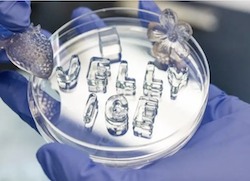 • What if you could capture the cooling properties of ice without the melting and contamination? University of California, Davis, researchers Jiahan Zou and Gang Sun have done just that with the development of jelly ice. “Compared to regular ice of the same shape and size, jelly ice has up to 80% of the cooling efficiency — the amount of heat the gel can absorb through phase change,” says Zou. “And we can reuse the material and maintain the heat absorbance across multiple freeze-thaw cycles, so that’s an advantage compared to regular ice.” The researchers developed a one-step process to create jelly ice, which is made up of a reusable, compostable material from gelatin and 90% water. It jiggles at room temperature and becomes more solid when cooled below the freezing point of water. Jelly ice doesn’t leak as it thaws and can be formed into any shape or design, making it ideal for shipping food and medication.
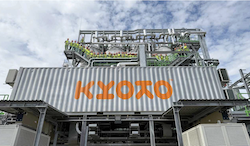 • On Oct. 9, Kyoto Group (Oslo, Norway) inaugurated its second European Heatcube at the KALL Ingredients corn-processing facility in Tiszapüspöki, Hungary. Heatcube uses intermittent renewable energy to heat molten salt to over 400°C, enabling it to store 39 to 104 MWh and deliver up to 14 MW of discharge power. The stored energy is released as high-temperature steam for industrial production processes. The 56 MWh Heatcube at the Hungary plant will provide more than 30 GWh of clean process heat annually, replacing natural gas and reducing up to 8,000 tons of CO₂ emissions annually. “This is a huge step forward for Kyoto Group and for clean low-cost industrial heat. Through our Heat-as-a-Service model, we provide KALL Ingredients with affordable, reliable, and emission-free steam—while enhancing grid flexibility in Hungary,” said Morten Bülow, CEO of Kyoto Group.
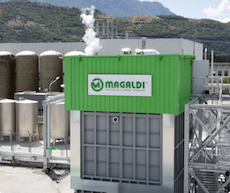 • The Magaldi Group (Salerno, Italy) collaborated with Enel (Rome, Italy) to build the Magaldi Green Thermal Energy Storage (MGTES) plant (Buccino, Italy), the first fluidized sand thermal battery in Italy. The system, which has a capacity of 7.5 MWh, reduces natural gas consumption, increases the flexibility of the electricity grid, and cuts CO₂ emissions by more than 500 metric tons per year for food company I.GI S.p.A (Palomonte, Italy). “The sand battery is a unique technology: we are demonstrating that it is possible to replace fossil fuels with innovative, safe, and scalable solutions that can support businesses in their transition to renewable energy while providing flexibility and stability for the electricity grid,” said Letizia Magaldi and Raffaello Magaldi, managing directors of Magaldi Green Energy. MGTES systems can decarbonize a wide range of process heating applications requiring medium temperatures from 100 to 600°C.
• University students in the Philippines have developed ChillWise, a lightweight foamed concrete panel that integrates air bubbles and a microencapsulated phase change material, which could reduce the need for air conditioning. The team at Mindanao State University (Marawi City) used rice hull ash and fly ash as fillers to increase strength, reduce costs, and lower carbon emissions. The developers claim that the ChillWise panels had up to 95% energy savings compared with conventional concrete in tests. The team is currently applying for patents, planning to test panels in homes and buildings, and exploring partnerships to bring the product to market.
• Nigeria has been granted $11 million in cold-chain equipment to support its national vaccine programs provided by the Global Alliance for Vaccines and Immunization (Gavi) and UNICEF. About 75% of the 1,653 solar direct-drive refrigerators provided are B Medical Systems brand. Maharajan Muthu, chief of health at UNICEF, said that cold-chain infrastructure is “the backbone of effective immunization programs.”
• Rubitherm announced that 𝐒𝐨𝐂4𝐏𝐂𝐌, a collaboration with the Center for Applied Energy Research (CAE), has been funded by the Federal Ministry for Economic Affairs and Energy (𝐁𝐌𝐖𝐄) under the Zentrales Innovationsprogramm Mittelstand (𝐙𝐈𝐌 𝐩𝐫𝐨𝐠𝐫𝐚𝐦). The SoC4PCM project focuses on the development of a high-performance PCM storage system combined with an AI-based measurement system for accurately determining the State of Charge (SoC) in PCM thermal energy storage, which is critical to the efficient operation of TES systems.
• Dery Sportswear (Zhangcha Town, China) has released a fishing jacket designed to protect outdoor enthusiasts from overheating, as well as the sun’s harmful rays. The jacket combines UPF 50+ fabric with phase-change cooling technology. The specialized fabric has been certified by SGS.
• The new ESCALATE report “Regional Heating & Cooling Policy Mapping and Multi-Level Governance Structures” was released. The report is designed to provide expert training and an easy-to-follow guide to empower local communities to make their buildings sustainable, reduce pollution, and help Europe become climate-neutral by 2050. The 2025 report analyzes heating and cooling policies across eight EU countries (Austria, Croatia, France, Germany, Greece, Italy, Poland, and Slovenia), explores governance structures, and highlights ways to accelerate decarbonization.
• On Oct. 2, Alexium International Group Limited (Greer, South Carolina) launched BioCool PL (Plus) for mattress fabrics, foams, toppers, and performance bedding products. The next-generation phase change material (PCM) technology builds on BioCool, providing faster reactivation, extended cooling, and a 100% bio-based PCM core.
• Cartesian (Trondheim, Norway), whose thermal battery uses PCM to store energy used to heat and cool buildings, was one of 11 early-stage start-ups selected from more than 550 applicants to take part in the ClimateTech cohort of Amazon’s Sustainability Accelerator. The program provides financial support, specialized mentorship, training, impact assessment, and alumni and networking events. The ESG Post reported that some participants may have the chance to pilot their solutions within Amazon’s European operations and that Amazon invested $870,000 across five pilot projects last year. “Being chosen is a powerful validation of our solution and that our mission matters,” said Cartesian CTO Alexis Sevault.
• HeatVentors (Budapest, Hungary) secures $4.68 Million in its series A funding round to scale its Intelligent Thermal Batteries and drive growth, particularly in the EU and the Middle East. The capital will reinforce HeatVentors’ technical infrastructure, accelerate product development for multi-megawatt hour storage applications, and support entry into strategic markets such as data centers, district heating networks, and large-scale cooling systems. The consortium of investors includes the Blue Planet Venture Capital Fund (Budapest, Hungary), InnoEnergy (Eindhoven, Netherlands), and Impulsus Clean Technologies GmbH (Merzig, Germany).
• On Oct. 16, Rondo Energy (Alameda, California) announced the start of commercial operation of what it claims is the world’s largest industrial heat battery. Its 100 MWh Rondo Heat Battery entered daily automatic operation, powered exclusively by an on-site PV solar array and delivering high-pressure, emission-free industrial heat and steam 24 hours a day to a fuel production facility in California. The company reported that the project has achieved all milestones — including storage temperatures over 1,000°C and round-trip efficiency above 97% — for daily automatic operation, performance, efficiency, and reliability after 10 weeks of operation. Rondo Energy says its battery uses only brick and wire, which can’t catch fire, explode, or cause toxic leaks.
• Kraftblock (Sulzbach, Germany) won a GreenTech Solutions Award in the clean energy category at the GreenTech Solutions Summit at the Birkenfeld Environmental Campus (Birkenfeld, Germany) in mid-October. The awards recognize pioneering achievements in sustainable technologies, resource conservation, and climate protection in five categories: clean energy, sustainable construction and renovation, water and environment, bioeconomy, and coup de coeur (heart prize).
• PuREEnergy (Hyderabad, India) outlines how India’s proposed draft Electricity Amendment Bill 2025 could accelerate its journey toward sustainable energy independence, laying out how energy storage systems (ESS) and battery energy storage systems (BESS) could increase renewable energy’s share in the national energy mix. For the first time, ESS receives formal recognition as distinct power system components, facilitating complete utilization of variable renewable energy from solar and wind sources. And BESS, which enables peak shifting, grid balancing, and renewable energy integration, could accelerate the nation’s path to achieving 500 GW of non-fossil capacity by 2030.
• Pluss Advanced Technologies Ltd. (Gurgaon, India) formally announced its strategic collaboration with two research universities in the Netherlands — the University of Twente (Enschede) and Eindhoven University of Technology (TU/e) (Eindhoven) — to develop projects in advanced materials and thermal innovation.
• Registration is open for the 13th Swiss Symposium on Thermal Energy Storage (SSTES‑2026) on Jan. 30, 2026, at the Lucerne University of Applied Sciences & Arts (HSLU) (Lucerne, Switzerland). The symposium will focus on the role of thermal energy storage (TES) in decarbonization with insights from leading experts in academia, industry, and utilities.
• The paper “Phase Change Materials as a Complementary Retrofit Strategy for Energy Efficiency: A Simulation-Based Comparative Analysis,” which was presented at the 6th International Conference on Building Energy and Environment (COBEE 2025) in Eindhoven, Netherland, is now available for download.
JOBS
• Cowa Thermal Solutions AG has an opening for a global business development and sales manager for the central Switzerland region. According to Cowa, it is a “key role in the international growth of an innovative cleantech company” with “direct influence on the development of new markets and partnerships.”
PATENTS
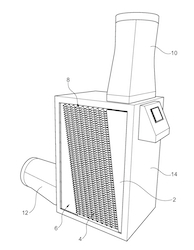 U.S. patent application 20250297814 (applicant Syddansk Universitet, Odense, Denmark):
“A Phase Changing Material module for a heat exchanger apparatus has a first plate shell and a second plate shell, both
shells having an undulated wave surface with a smooth, periodic oscillation. Both plates have a rectangular peripheral edge portion. The first and second plate shells are joined together along their peripheral edges to form an internal
volume which is filled with a phase changing material.”
U.S. patent application 20250273766 (applicant Shell USA, Inc., Houston, Texas):
“The present invention provides a thermal management system comprising: a housing having an interior space; at least one heat-generating component disposed within the interior space; and a working fluid disposed within the interior space such that at least part of the heat-generating component is in direct contact with the working fluid; wherein the working fluid comprises base fluid and at least one phase change material selected from micro-encapsulated phase change materials, nano-encapsulated phase change materials, and mixtures thereof. The present invention also provides a method of thermal management of a heat-generating component comprising the steps of directly contacting at least part of the heat-generating component with a working fluid; and transferring the heat away from the heat-generating component using the working fluid wherein the working fluid comprises base fluid and at least one encapsulated phase change material selected from micro-encapsulated phase change materials, nano-encapsulated phase change materials, and mixtures thereof.”
Refrigeration system and method enabling demand flexibility
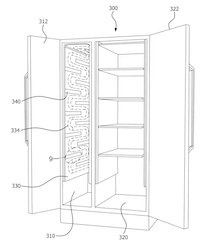 U.S. patent application 20250271204 (applicant UT-Battelle, LLC, Oak Ridge, Tennessee):
“A refrigeration system includes one or multiple refrigeration compartments, one or multiple phase change evaporators,
one or multiple fans, a compressor and a condenser. The phase change evaporators and fans are within the refrigeration compartments, and comprises an open cell heat conductive foam having a phase change material embedded within the cells of the open cell heat conductive foam. A refrigerant conduit is provided and is in thermal contact with the open cell heat conductive foam, and contains a refrigerant fluid and communicates with a refrigeration cycle conduit which circulates the refrigerant in a refrigeration cycle. The fans are provided to increase heat transfer between the phase change evaporators and the refrigeration
compartments.”
More U.S. patent applications:
Polyether amine-based flexible phase change materials with high enthalpy value, preparation method and application thereof (Dalian University of Technology, Dalian, China.) | Energy storage device and a method for manufacturing the same (TVS Motor Company Ltd., Chennai, India.) | Fast charging batteries at low temperatures with battery pack preheating (Beam Global, San Diego, California.) | Batteries provided with a thermal management system comprising phase-change materials (Université Paris-Est Créteil, Créteil, France.) | Phase change material for thermal therapy and delivery of active ingredients (Alps South, LLC, St Petersburg, Florida.) | Container for storing and serving frozen confectionery items (Conopco, Inc., Englewood Cliffs, New Jersey.) | Phase-change heat-storage foamed concrete and preparation method and use thereof (Hebei University of Technology, Tianjin, China.)
RESEARCH ROUNDUP
From International Journal of Heat and Mass Transfer:
• Heat release performance of water-phase change material mixture under periodic heat sink condition
From Applied Thermal Engineering:
• Thermal management of lithium-ion battery packs using rice husk-Fe3O4 nanoparticles and new phase change materials: Experimental study and CFD modeling
• Phase-change material based metasurface absorber surpassing 90% solar-thermal conversion efficiency
From Engineering Science and Technology, an International Journal:
From Case Studies in Thermal Engineering:
From Engineering Science and Technology, an International Journal:
From Sustainable Energy Technologies and Assessments:
From Journal of Energy Storage:
• Emerging magnesium chloride hexahydrate phase change material targeting cold storage engineering
• Fabrication of shape-stable phase change material with waterproof property and high mechanical strength
• A novel bio-based composite: High-performance shape-stabilized phase change material for solar thermal collection
• Study on heat storage and release characteristics of a novel phase-change thermal energy storage device using microchannel parallel-flow flat pipes
From Energy and Buildings:
• Mobile radiative cooling system based on thermoelectric cooling and phase change materials: thermal comfort and energy efficiency analysis
• Development of Mardin Stone-Based Shape-Stabilized phase change material concretes for sustainable thermal energy storage in buildings
• Enhancing building roof thermal energy efficiency in hot climates: A novel dual-layer design with integrated phase change materials
From Sustainable Materials and Technologies:
From Journal of Colloid and Interface Science:
From Thermal Science and Engineering Progress:
From Journal of Engineering and Applied Science:
From Journal of the Taiwan Institute of Chemical Engineers:
From Engineering:
From Carbohydrate Polymers:
From Solar Energy Materials and Solar Cells:
From International Communications in Heat and Mass Transfer:
From Materials Today Sustainability:
NETWORKING
Connect with PCM experts and industry leaders on LinkedIn
 More than 1,800 people have joined a LinkedIn group devoted to the discussion of phase change material and thermal energy storage. You are invited to join the Phase Change Matters group and connect with PCM and TES experts from around the world.
This month we welcome Shane Magee, founder and co-managing partner of Sugar Maple Capital, Toronto, Canada; Michael R, owner and general manager of Eden Energy Equipment, Ltd., Guelph, Canada; Graham Smith, chief revenue officer for Thermal Energy HQ, Niagara, Canada; Louis Veret, student at EPF Engineering School, Cachan, France; Luca Molinaroli, associate professor at Politecnico di Milano, Milan, Italy; Chen Zhang, cold chain engineering specialist at Veritiv Corp., Matawan, New Jersey; Kaiser Matin, engineer SME at Fibertek, Inc., Herndon, Virginia; Christian Brunner, senior product manager at GEBHARDT Logistic Solutions GmbH, Cham, Germany; Ty Dahlgren, sales associate for Pohle EZGO Cushman, Arizona, United States; Rajkumar Yadav, head of quality management, Pluss Advanced Technologies Ltd., Gurgaon, India; Nikola Vranjic, thermal expert at thermIT consulting, Zavrtnica, Croatia; and Mohammed EL GOUAL, Ph.D. student in physics and engineering at the Université Mohammed Premier Oujda, Oujda, Morocco.
NEWS TIPS
Does your company, agency or university have a job opening, new research, new product or other news you’d like to share? I would love to hear from you. Please contact newsletter editor Amy Phillips at phasechangematters@gmail.com.
A WORD FROM OUR SPONSOR
 This newsletter is made possible through the generous support of the RAL Quality Association PCM and the members listed below. To learn more about the association, including membership benefits, please contact Stefan Thomann, executive director, at pcm@kellencompany.com.
Axiotherm GmbH | B Medical Systems | Croda International Plc. | ISU Chemical Co. Ltd. | RuhrTech | Microtek Laboratories | PCM Technology | PLUSS Advanced Technologies | PureTemp LLC | Rubitherm Technologies GmbH | Sasol Germany GmbH | S.Lab Asia Inc. | Sunamp Ltd. | va-Q-tec AG